


GLEEBLE MAINTENANCE & SYSTEM CALIBRATION
Comprehensive Upkeep for Reliable System Efficiency
Protect your investment. Maintain testing accuracy. Minimize downtime. Expert preventive maintenance plans and calibration services for Gleeble 3000 and 500 series systems — engineered to keep your materials research operating at full precision.
Precision Begins with Proper Upkeep
A poorly maintained Gleeble system doesn't just risk downtime — it risks data integrity, experimental reproducibility, and the validity of your materials research.
Gleeble thermo-mechanical simulators are among the most capable — and mechanically complex — systems in materials science. They combine high-speed servo-hydraulic loading, precision resistive heating, real-time control electronics, and cryogenic or atmospheric testing environments into a single platform. Each subsystem requires periodic attention to maintain the calibrated accuracy your research demands.
Whether you operate a Gleeble 3000 series or a Gleeble 500 series system, a documented preventive maintenance plan is not optional — it is the foundation of reliable, reproducible testing.
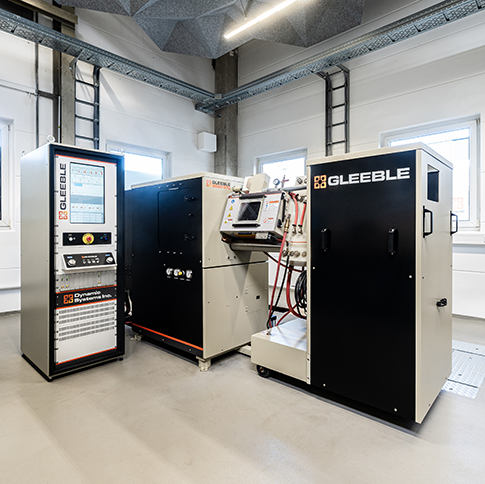

"Proper maintenance of a Gleeble system is essential to ensuring the accuracy and repeatability of thermal-mechanical simulations, which are critical to both research and industrial applications. Consistent upkeep and calibration not only preserve the integrity of test results but also enhance system reliability, minimize downtime, and protect a significant capital investment over the long term."

Experiencing Issues? Contact Our Team.
Whether you need to schedule a preventive maintenance visit, request urgent service support, or troubleshoot a recurring system issue — our service team is ready to help.
General Maintenance Schedule for Gleeble Systems
|
Maintenance Item |
Daily |
Weekly |
Every 3 Months |
Every 6 Months |
Yearly |
Every 3 Years |
|
Examine Grips for Oxidation and Damage |
● |
|
|
|
|
|
|
Examine Wear Plates for Oxidation and Damage |
● |
|
|
|
|
|
|
Check Vacuum Pump Oil Level/Quality |
● |
|
|
|
|
|
|
Clean the Vacuum Tank |
● |
|
|
|
|
|
|
Check Hydraulic Pump Oil Level |
|
● |
|
|
|
|
|
Check Diffusion Pump Oil Level |
|
● |
|
|
|
|
|
Test Emergency Stop Button |
|
● |
|
|
|
|
|
Change the Water Filter in the Load Unit |
|
|
● |
|
|
|
|
Change the Rough Pump Oil |
|
|
|
● |
|
|
|
Complete System Calibration |
|
|
|
|
● |
|
|
Change the Hydraulic Pump Oil Filter |
|
|
|
|
● |
|
|
Change Hydraulic Oil Filter in the Load Unit |
|
|
|
|
● |
|
|
Change the Hydraulic Oil Filter in all MCUs |
|
|
|
|
● |
|
|
Inspect the air oiler & refill if necessary |
|
|
|
|
● |
|
|
Change Diffusion Pump Oil |
|
|
|
|
● |
|
|
Replace Vacuum Tank O-Rings in all MCUs |
|
|
|
|
● |
|
|
Change Water and Glycol in the Chiller |
|
|
|
|
● |
|
|
Charge Accumulators in the Load Unit and in all MCUs (Hydrawedge, Torsion, MAXStrain) |
|
|
|
|
● |
|
|
Change Hydraulic Pump Oil |
|
|
|
|
|
● |
Note for high-utilization environments: Facilities running continuous production simulation or operating in harsh atmosphere environments (e.g., high-sulfur, hydrogen, or salt-spray) should consider increasing preventative maintenance frequency. Contact our service team for a customized maintenance program tailored to your specific testing conditions.
Warning Signs Your Gleeble Needs Attention
Don't wait for a system failure to interrupt critical research. These are the most common early indicators that your Gleeble requires professional servicing.
- Inconsistent Test Results Reproducibility issues between identical test programs — particularly for flow stress curves — often indicate transducer drift or thermocouple attachment problems.
- Temperature Control Instability Overshoot, oscillation, or inability to hold a thermal setpoint precisely. This may indicate worn thermocouples, power supply degradation, or a control loop that needs retuning.
- Force or Stroke Zero Drift If load cell or LVDT readings do not return cleanly to zero after an unloaded cycle, calibration has shifted and all recent test data should be reviewed for accuracy.
- Hydraulic System Abnormalities Increased response time, unusual noise, visible oil seepage around fittings, or hydraulic pressure that does not build normally are all indicators of a system requiring service.
- Persistent Software Faults Repeated error codes, DAQ communication dropouts, or control system alarms that were not present during normal operation indicate hardware or firmware issues requiring attention.
- Slow Vacuum Performance If your system takes significantly longer than usual to reach target vacuum levels, chamber seals or the vacuum pump may be degraded — affecting atmosphere integrity during testing.

Protect Performance. Preserve Precision.
From routine maintenance to urgent support, our experts are here to ensure your system operates with precision and reliability—so your work never skips a beat. Schedule your Gleeble maintenance today.