


PIONEERING ADVANCED PHYSICAL SIMULATION FOR NEXT-GENERATION MATERIALS SCIENCE
The Beginning: From RPI Labs to Industry Innovation
Dynamic Systems Inc. (DSI) was founded in 1957 by Dr. Warren Savage, Dr. Ernest Nippes, and Dr. Hugo Ferguson at Rensselaer Polytechnic Institute (RPI). What began as a small project to build specialized welding equipment for their own research quickly drew attention from other laboratories. Early requests for similar equipment led to the creation of DSI, originally called Duffers Associates—a nod to the founders’ humble beginnings “hacking away in the attic.” The company later became Duffers Scientific Inc., and ultimately Dynamic Systems Inc.
The founders were motivated by a critical challenge: weld heat-affected zones (HAZ) were cracking and failing in structural applications, and there was no reliable way to study why. Welding produces extremely small zones with complex microstructures, and even a single weak microstructure could lead to severe failures. The urgency of this problem was amplified during World War II, as Liberty Ships were being mass-produced with welded steel plates. Many ships experienced structural failures, underscoring the need for precise laboratory tools to study welding effects.
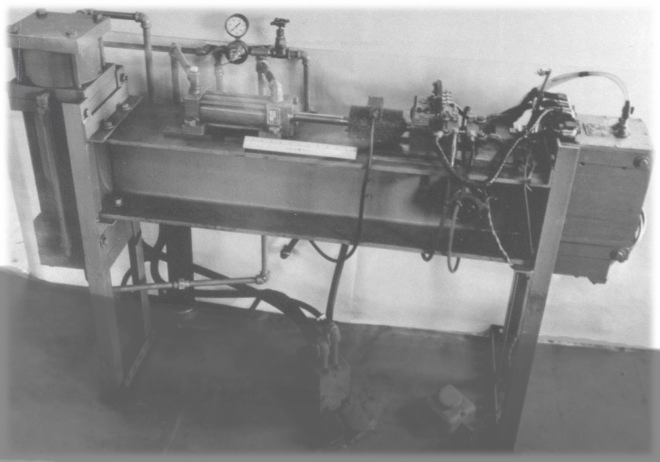
The solution was the Gleeble®, a system designed to simulate welding thermal cycles in the lab. By creating specimens that replicate the HAZ under controlled conditions, researchers could conduct further mechanical tests and optimize welding processes to avoid weak microstructures.
Early Innovation: Thermal Control Without Computers
The first Gleeble machines were thermal-only systems, using resistance heating controlled by welding transformers. DSI’s founders pioneered precise temperature measurements by switching off power at specific points in the heating cycle, achieving unmatched control over heating and cooling rates—thousands of degrees per second, mimicking real welding conditions.
These early Gleebles were mechanically driven, with analog electronics and cams physically ground to create thermal cycles. Despite their simplicity, nothing else at the time could replicate the speed and precision of welding conditions in a laboratory setting. The Gleeble quickly became an indispensable tool for researchers, with major U.S. steel companies adopting the system, and the first Gleeble shipped to Europe in 1962 to a specialty steelmaker in France.
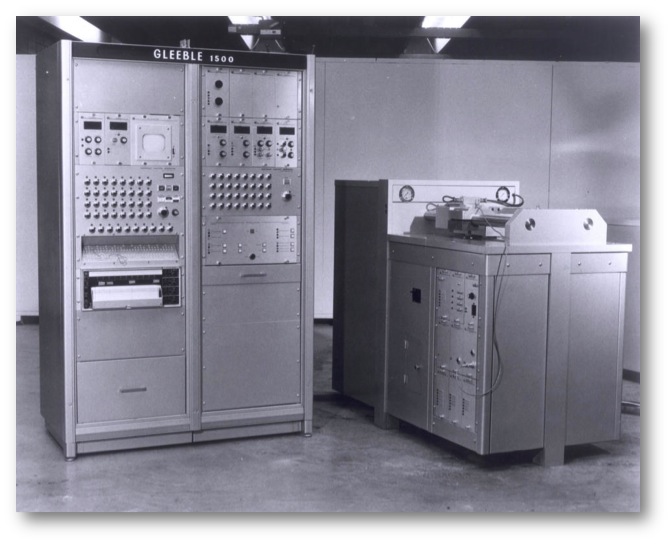
The 1970s: A New Era With The Gleeble 1500
In 1979, DSI introduced the Gleeble 1500, the first true servo-hydraulic Gleeble combining closed-loop thermal and mechanical control in a single system under computer supervision. Early models were controlled via a 16-bit microprocessor with tabular programming, later adapted to IBM personal computers.
The 1500 enabled:
- Integrated thermal and mechanical simulation
- Advanced applications, including continuous casting simulation
- Broader international adoption, with sales to Japan, China, and Europe
Over the 1980s, more than 130 Gleeble 1500 systems were delivered worldwide, cementing DSI’s role as a leader in materials physical simulation.
1990s: A New Era of Innovation
Dynamic Systems Inc. entered a new phase of growth in the 1990s, marked by a company rebrand and the introduction of next-generation Gleeble systems.
- Company renamed Dynamic Systems Inc. (DSI)
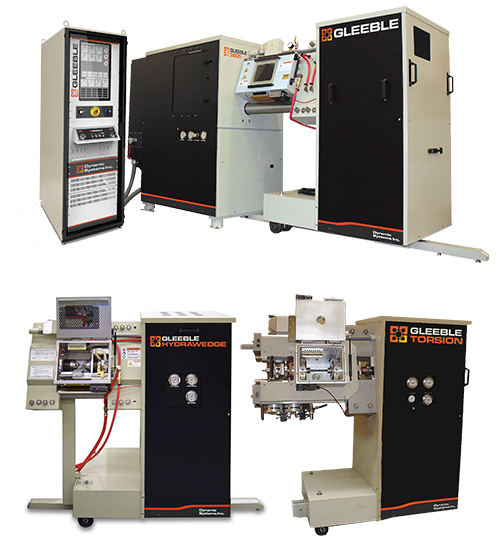
- Introduction of the Gleeble 3500, featuring a clean-sheet redesign with all-digital control and enhanced system flexibility
- Launch of the Gleeble 3800, expanding capabilities for advanced thermo-mechanical simulation
- Development of Mobile Conversion Units (MCUs), enabling rapid switching between testing modes such as tension, torsion, and compression
- Introduction of specialized MCUs, including Hydrawedge for high-speed rolling simulation and Torsion units for advanced deformation studies
These advancements significantly increased system versatility and enabled more accurate simulation of complex industrial processes.
2000s: Expanding Capabilities and Global Reach
Building on the success of the 3000 series, DSI continued to enhance both system performance and global presence.
- Major mechanical and software upgrades across the 3000 series, improving precision, control, and data acquisition
- Opening of DSI’s Shanghai office, strengthening support for customers in Asia
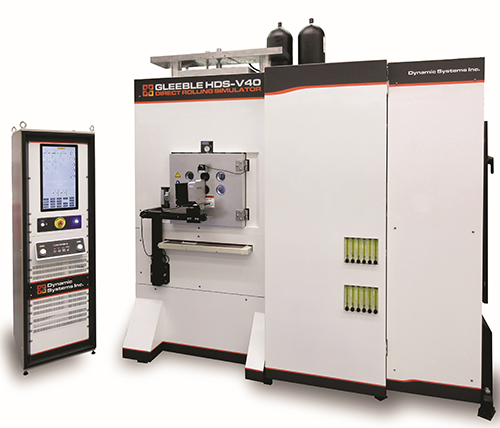
- Introduction of new systems, including the Gleeble 3180, HDS-V40, and Beamline Gleeble
- The HDS-V40 enabled unique simulation of continuous casting and direct rolling processes on a single specimen
These developments allowed customers to model increasingly complex manufacturing processes with greater accuracy and repeatability.
2010s: Regional Expansion and Advanced Applications
The 2010s marked a period of strategic growth and continued technological advancement.
- Establishment of DSI Europe GmbH, expanding regional support and expertise
- DSI celebrates 60 years of innovation in physical simulation
- Introduction of Ultra-High Temperature MCUs and enhanced strip annealing capabilities
- Launch of the Gleeble 500 Series (e.g., 563, 540), extending performance and application range
This decade reinforced DSI’s global footprint while enabling new high-temperature and process-specific applications.

2020 and Beyond: Integration and Next-Generation Technology
DSI continues to evolve through strategic partnerships and advanced system development.
- DSI joins the VPG family, strengthening resources and global reach
- Introduction of new technologies, including the Gleeble 525, RAPID systems, induction heating, and cryo-quench capabilities
These innovations reflect DSI’s ongoing commitment to expanding the boundaries of materials testing and physical simulation.