


EXPLORE GLEEBLE APPLICATIONS: FROM THERMAL & PHASE ANALYSIS TO PROCESS SIMULATION
Thermal & Phase Analysis and Process Simulation for Smarter Materials Development
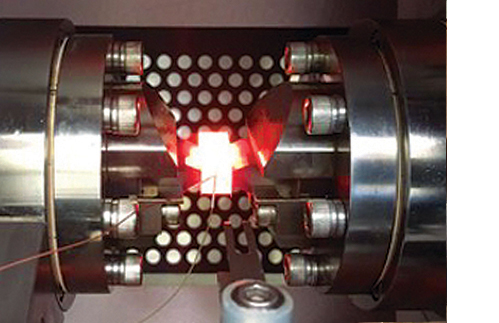
Gleeble systems support a focused range of applications in thermal & phase analysis and process simulation, enabling engineers and researchers to replicate, measure, and optimize material behavior under real-world conditions. From precise phase transformation studies to full-scale thermo-mechanical process replication, Gleeble delivers accurate, repeatable insights to guide materials development and manufacturing decisions.
Whether you're generating CCT and TTT data, refining heat treatment strategies, or simulating rolling, forging, and welding processes, Gleeble’s thermo-mechanical simulation technology provides the control and data fidelity needed to reduce risk, improve performance, and accelerate development.

ADVANCE MATERIALS TESTING WITH GLEEBLE
Discover how Gleeble’s thermal analysis and process simulation capabilities support your application—from phase transformation studies to full process optimization. Connect with our experts to find the right solution for your testing and simulation needs.
APPLICATIONS HUB
Select an application below to access detailed technical overviews, test methodologies, example results, and guidance on configuring your Gleeble system for your specific research or production challenge.

Characterize material behavior during heating and cooling with precision-controlled thermal testing and in-situ measurement techniques. Generate critical transformation data to support heat treatment design, alloy development, and microstructural prediction across steels, titanium, nickel-based alloys, and advanced materials.
Key capabilities include:
- Determining transformation start and finish temperatures
- Developing CCT and TTT diagrams
- Measuring phase evolution using resistivity and dilatometry
- Supporting heat treatment optimization and alloy design models

Replicate industrial manufacturing conditions such as rolling, forging, extrusion, and welding thermal cycles under controlled laboratory settings. Validate process parameters, refine FEA models, and predict final microstructure and mechanical properties before committing to full-scale production.
Key capabilities include:
- Simulating thermo-mechanical processing schedules
- Modeling microstructural evolution and property development
- Optimizing forming and heat treatment parameters
- Reducing risk in pilot and production-scale trials
 CONTACT GLEEBLE TODAY!
Have a materials challenge that standard testing can’t solve? Connect with our Gleeble experts to discuss your application, simulation requirements, or custom system needs. We’ll help you define the right solution to move your research or production program forward.